Beyond the Numbers: Employment, Independence and the Power of Opportunity
Human Technologies welcomed leaders from across New York State and the Mohawk Valley on Wednesday for a conversation about the economic and social impact of employment opportunities for people with disabilities. The event highlighted findings from the Rockefeller Institute of Government’s 2026 report examining the economic and social impact of disability service providers and New York State’s Preferred Source Program. Human Technologies was joined by Maureen O’Brien, President and CEO of New York State Industries for the Disabled (NYSID); Utica Mayor Michael Galime; New York State Assemblywoman Marianne Buttenschon; and members of HT’s leadership team, Board of Directors and workforce.
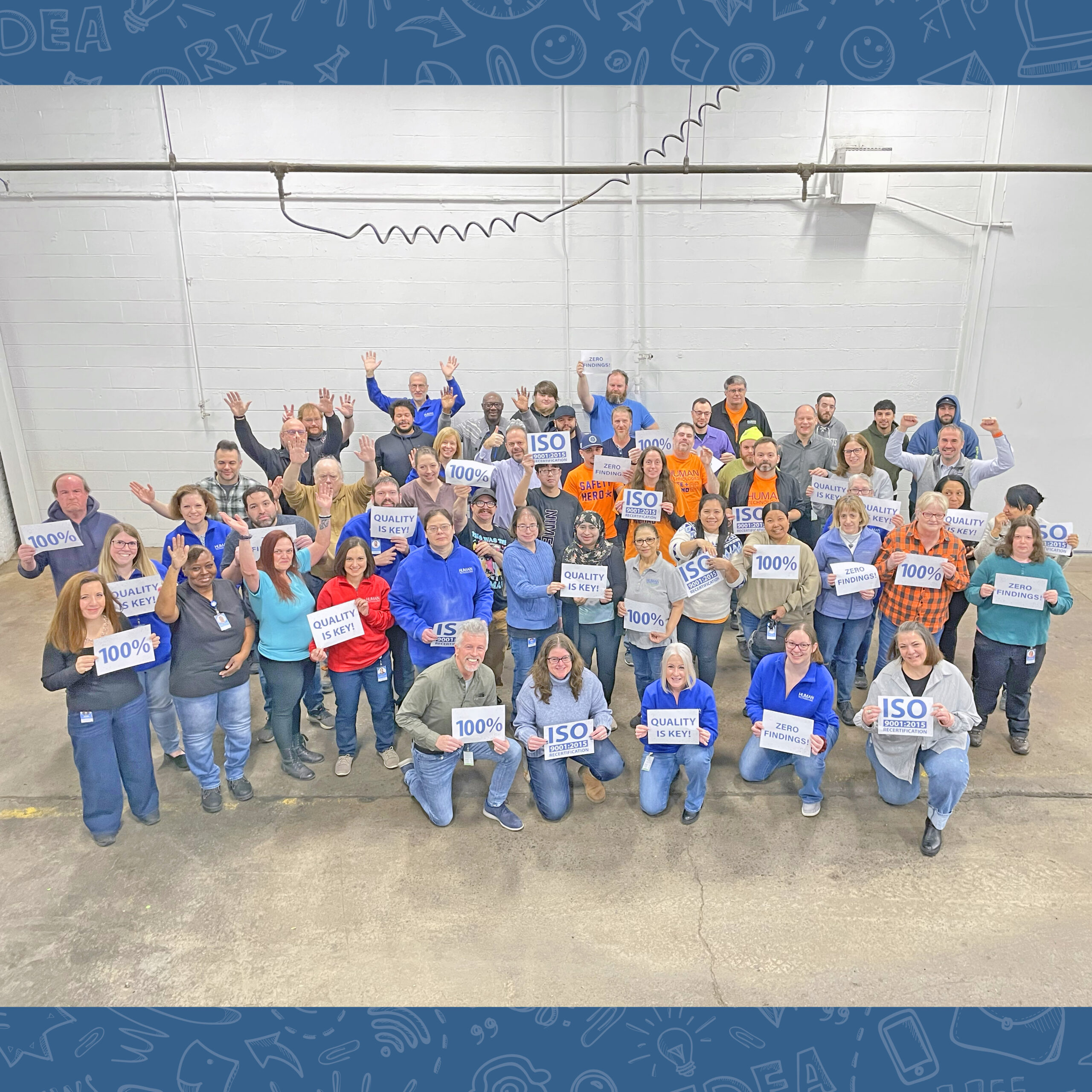
Opening the program, Human Technologies President and CEO Carl Reistrom connected the statewide findings directly to the work happening every day at HT. Through NYSID contracts, Human Technologies employs more than 150 people who collectively work approximately 135,000 hours, generating $2.4 million in wages and $11 million in sales and economic impact for New York State. “When you look at the work that HT does, those numbers have faces,” Reistrom said. “They have names. They are coworkers, they’re our colleagues and they’re our friends.” For Reistrom, the impact of employment extends far beyond a paycheck, providing independence, confidence, friendships, financial security and the ability to make choices about where and how someone lives. “People with disabilities don’t need our sympathy. They need opportunity,” he said. “And when given that opportunity, they demonstrate what they can do.”
From Employment to Independence
Human Technologies employee Adam Barnes put a personal story behind those numbers. Barnes, who has Asperger’s and apraxia, is approaching his first anniversary with HT and has been trained in numerous responsibilities, including inspecting chemical helmet cases, packing and inspecting orders for the U.S. Forest Service and engraving Forest Service nameplates. He has also served on employee committees and participated on HT’s team for the Walk for Autism. “My favorite part of my job are the people I work with and for,” Barnes said. “Human Technologies is a great place to work for.”
But his job has provided something even bigger. “My job has given me my independence,” Barnes told those gathered. “Last month I was able to move out of my parents’ and into my own apartment.” Barnes holds a master’s degree in museum studies and said he spent years searching unsuccessfully for employment before finding an opportunity at Human Technologies. He will soon take his story directly to policymakers on Capitol Hill, sharing his experience and advocating for greater employment opportunities for people with disabilities.
Strong Support Across New York
Maureen O’Brien shared findings from both the Rockefeller Institute research and a statewide survey of 1,000 New York voters conducted with Global Strategy Group. The survey found that 93% of voters believe it is important for workplaces to be inclusive of people with disabilities, while more than nine in 10 believe legislative expansion of the Preferred Source Program should be prioritized. That support comes at an important time, as NYSID plans to advocate in 2027 for making the Preferred Source law permanent. Currently, the law includes a sunset provision requiring periodic legislative renewal. Last year, NYSID contracts provided work for more than 6,000 people across New York State at prevailing or minimum wages in fully integrated environments. “By creating more inclusive workplaces, New York can strengthen its workforce, grow its economy, and ensure that all of us have the opportunity to contribute and succeed,”O’Brien said.
A Community Impact
Utica Mayor Michael Galime emphasized that the impact of organizations like Human Technologies extends throughout the community. “When you tour this facility, when you really learn how this facility came to be, you realize, Carl said it best, this is more than jobs,”Galime said. He described seeing skilled work and careers in action throughout Human Technologies, while also seeing neighbors, friends and family members building meaningful lives through employment. “This is an industry that is truly creating an avenue for people to lead self-directed lives,” he said. Galime also pledged to bring that message beyond Utica through his involvement with the New York State Conference of Mayors and advocate for continued support of the Preferred Source Program.
Assemblywoman Marianne Buttenschon echoed that message, emphasizing the importance of recognizing employees for their abilities and the role employment can play in a person’s life. “I think that work gives an individual self-worth,”Buttenschon said. “Our work fulfills us, and that’s what you do for individuals.”
Creating Careers, Choices and Opportunities
The Rockefeller Institute report puts numbers behind the economic and social impact of disability employment across New York State. At Human Technologies, those numbers are reflected every day in employees building skills, earning promotions, serving customers, supporting their families and contributing to their communities.
As Reistrom told those gathered, the goal goes beyond simply creating jobs. “Ultimately, our goal shouldn’t be to create more jobs for people with disabilities,” he said. “It should be to create careers, choices and opportunities.”
For Human Technologies, that work continues every day, powered by people, strengthened through partnerships and driven by the belief that when people are given an opportunity to demonstrate what they can do, everyone benefits.